HISTORY
The crust was a coffin
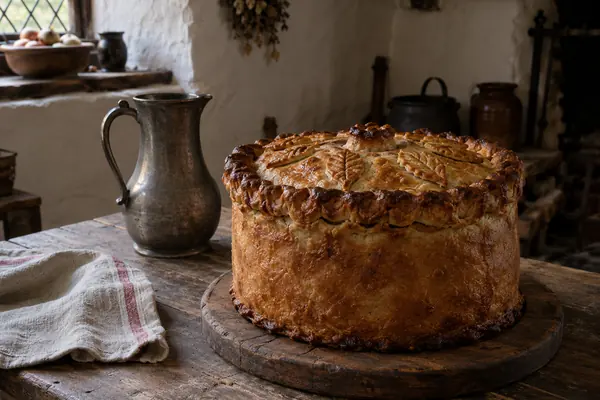
The Folger Shakespeare Library notes that pie crusts were called coffins, a word that first meant a basket or box. Some thick rye crusts were not even eaten.
Read the history doodlepies
00WHAT THE RECORDS SAY
Some pies have rules, and the rules have history.
Early pie crusts were sturdy boxes called coffins. Today a Melton Mowbray pork pie and a Cornish pasty can only carry those names if they follow a registered recipe and come from a set place.
Spot a real one01Principles
02THE SHORT ANSWER
Pies began as a way to carry and keep food.
Two British bakes now have their recipes written into the register.
HISTORY
The Folger Shakespeare Library notes that pie crusts were called coffins, a word that first meant a basket or box. Some thick rye crusts were not even eaten.
Read the historyPORK PIE
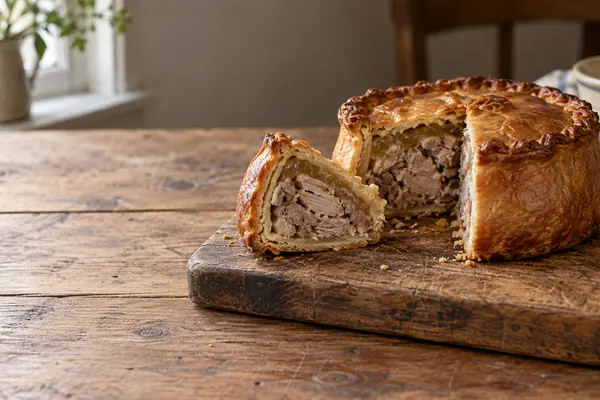
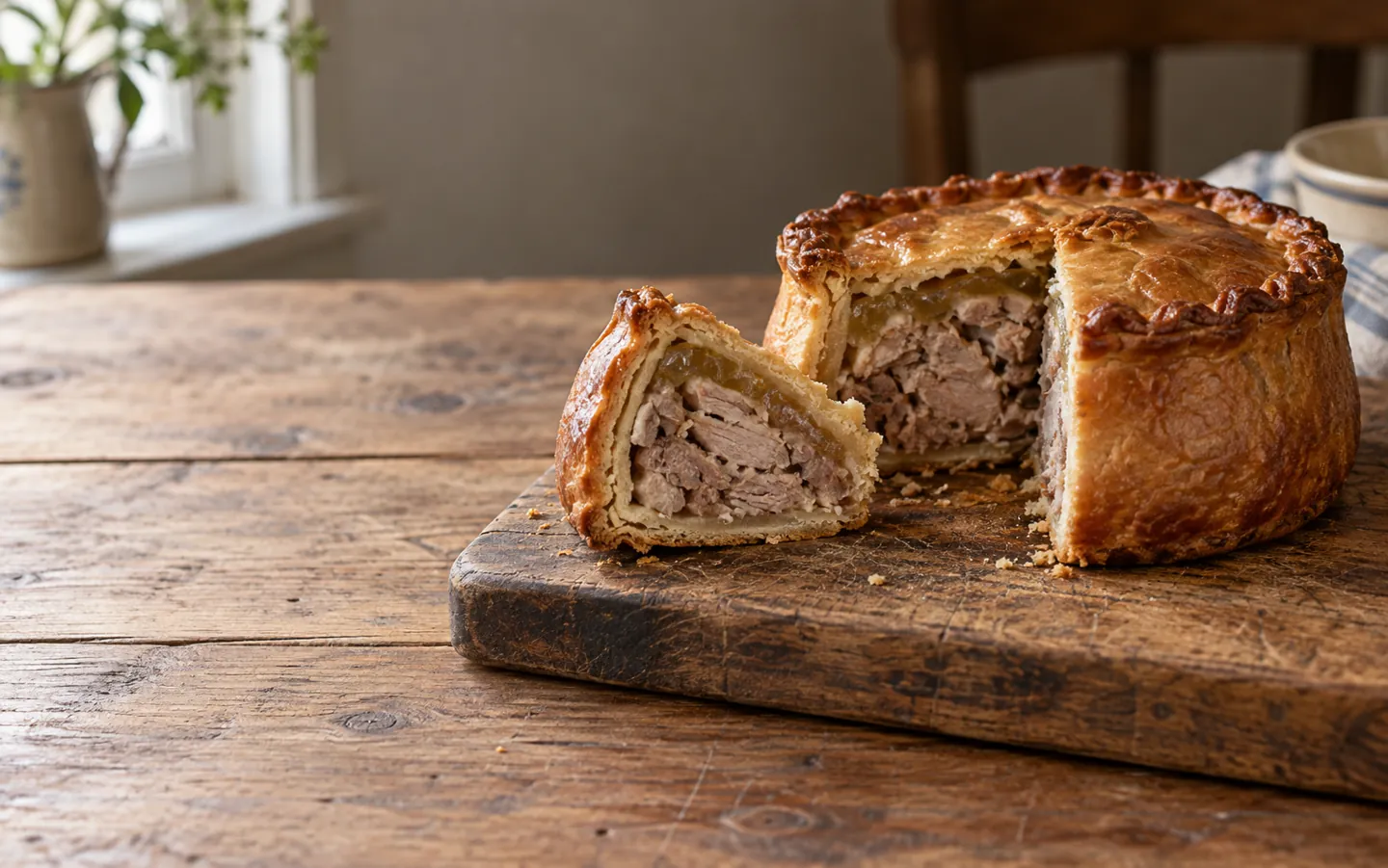
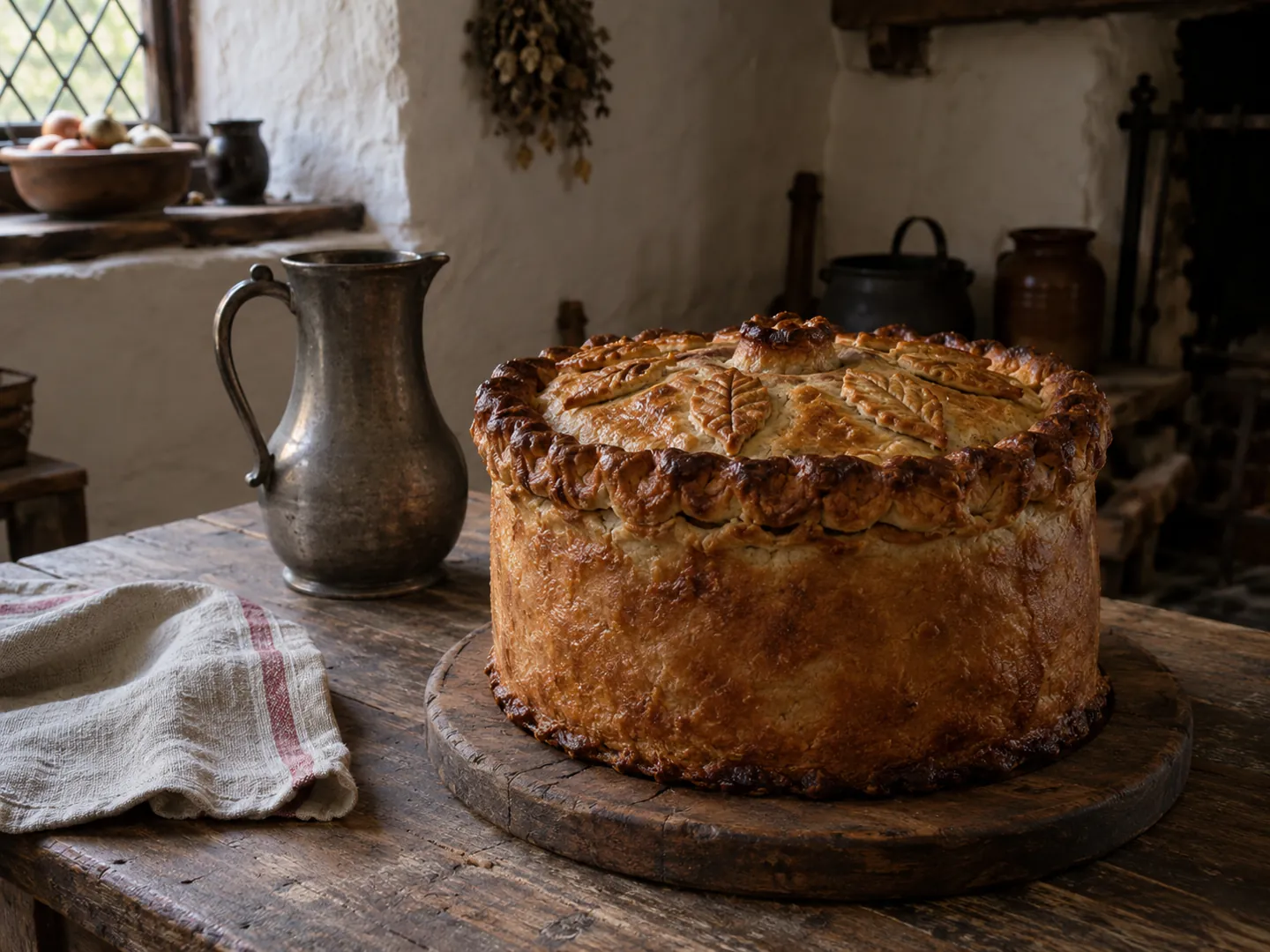
A Melton Mowbray pork pie must use uncured pork, so the filling is the colour of roast pork, with jelly between filling and a bow-walled crust.
Test a piePASTY
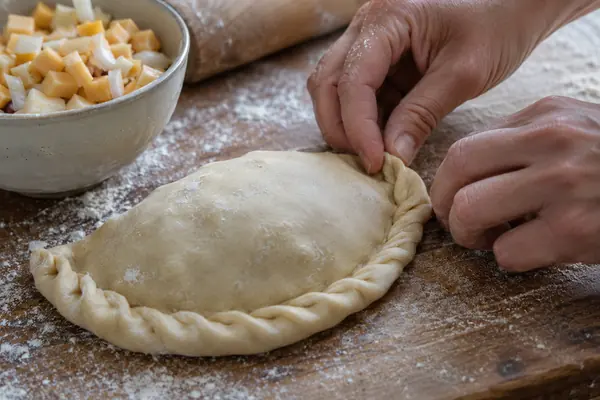
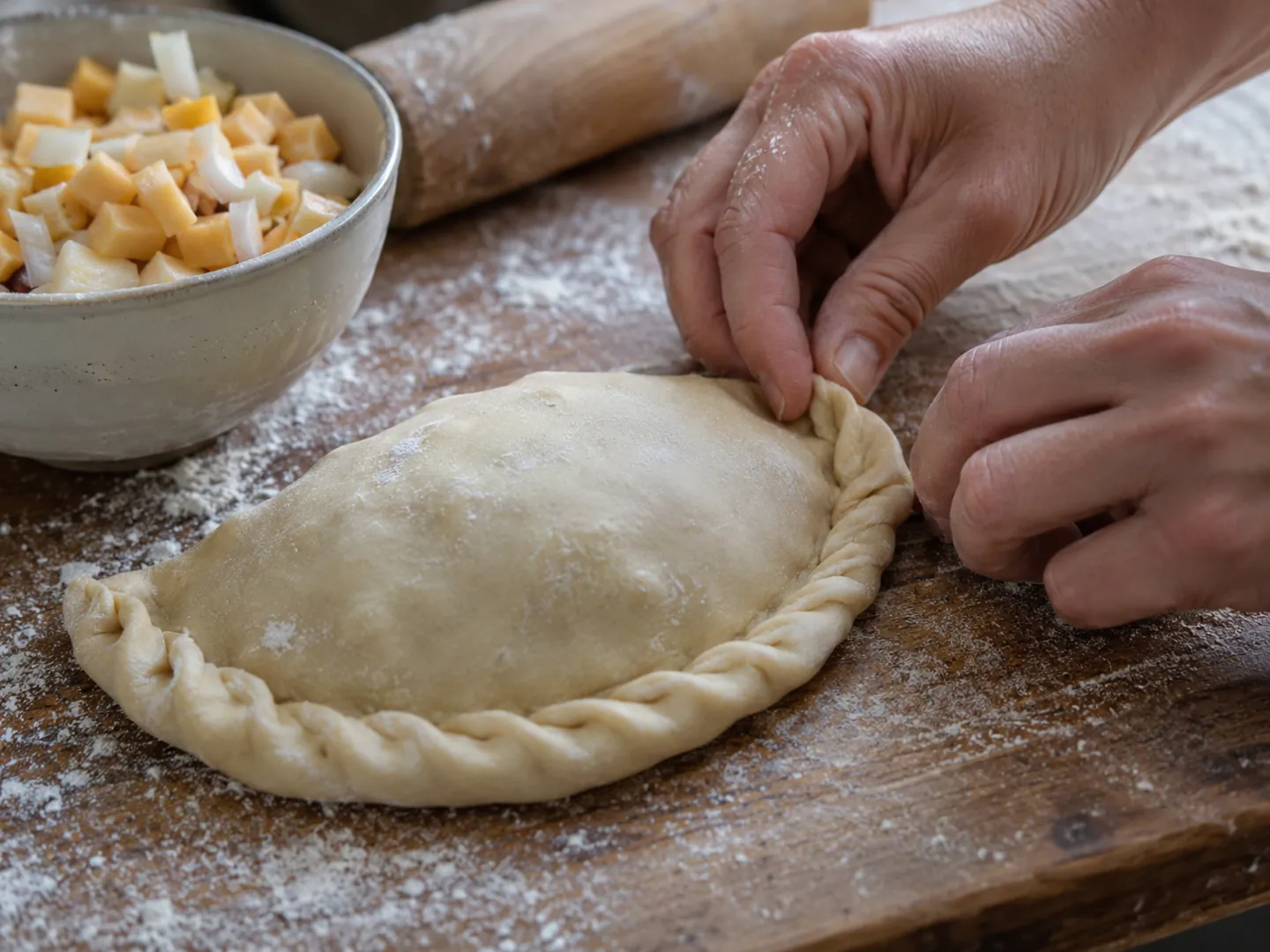
A Cornish pasty is beef, potato, swede and onion, sealed raw in a D shape and crimped along one side, and it must be made in Cornwall.
See the numbers03A QUICK NAME CHECK
Pick a bake to see whether it could be sold under the protected name. The bar shows how closely it fits the registered specification.
Based on the registered UK specifications for Melton Mowbray Pork Pie (PGI) and Cornish Pasty (PGI). Producers must also be verified to use the name.
04TWO NUMBERS WORTH KNOWING
Each specification sets a minimum meat content
for the whole bake, pastry included.
30%
Minimum meat in a Melton Mowbray pork pie
The specification says the meat content of the whole pie must be at least 30 percent. Optional extras such as glaze, rusk and starch may not exceed 8 percent in total.
PORK PIE · PGI SPECIFICATION
12.5%
Minimum beef in a Cornish pasty
Beef must be at least 12.5 percent of the whole pasty, and the vegetables at least 25 percent. Extras may make up no more than 5 percent of the filling by weight.
PASTY · PGI SPECIFICATION
The Melton Mowbray pork pie was first registered with the EU on 30 June 2009 and the Cornish pasty on 23 July 2011. Both moved onto the UK scheme on 31 December 2020.
05FOUR THINGS TO LOOK FOR
You do not need a lab to tell a protected bake from a look-alike. The specifications describe what to see on the counter and on the label.
The specification describes a bow-walled crust: the pies leave their hoops and are baked on a tray without support.
Uncured pork bakes grey, like roast pork. A pink filling means cured meat, which the rules do not allow.
A Cornish pasty is D-shaped with the crimped edge to one side, not a pinched ridge across the top.
Both specifications describe a certification number on packaging that traces each bake back to its producer.
06WHY PIES TRAVELLED
Durham University historian Dr Amanda Herbert notes that in early modern Britain a well-sealed crust could keep a filling fresh for days or weeks before refrigeration, so pies were sent to friends and relatives as gifts.
The pork pie specification records that Melton Mowbray pies were carried by hunt servants as snacks, and that in 1831 Edward Adcock began sending them to London on the daily stagecoach. The Cornish pasty specification describes miners and farmworkers taking pasties to work in their pockets.
07Questions
The Folger Shakespeare Library explains that coffin originally meant simply a basket or box. Early crusts were thick enough to bake without a container, and some rye crusts were not eaten and could even be reused.
GOV.UK says a geographical indication protects a product name from misuse or imitation. No one business owns it: any producer can use the name if they follow the specification and are verified to do so.
In the town of Melton Mowbray and a surrounding area bounded by the A52, A1, M1, A45 and A605, which takes in Nottingham, Grantham, Stamford and Northampton.
No. The specification allows no meat other than beef and no vegetables other than potato, swede and onion. Small amounts of other ingredients for flavour or processing are allowed, up to 5 percent of the filling.
The specification notes that in Cornwall swede is traditionally called turnip, so the two words are used interchangeably, but the actual ingredient is swede.
08Sources
ABOUT THIS NAME
doodlepies.com is part of the DoodleSale portfolio. It isn't in an auction right now, but you can ask about leasing it.